NIS2 in 2026: How Europe’s Water Supply Sector is being Redefined by Mandatory Cybersecurity
By: Nooraishah Omar, Asian Water
By 2026, cybersecurity is no longer a voluntary best practice for Europe’s water supply sector—it is a legal obligation. The EU’s NIS2 Directive (Directive (EU) 2022/2555) has moved from policy ambition to practical reality, firmly classifying drinking water and wastewater services as critical infrastructure. While the directive entered into force back in January 2023, its true impact is now being felt as member states complete (or struggle to complete) national transposition and regulators begin enforcing compliance. For water utilities across the EU, 2026 represents a pivotal year of transition, investment and accountability.
From Directive to National Law: A Fragmented Landscape
Under EU law, member states were required to transpose NIS2 (Network and Information Security Directive) into national legislation by 17 October 2024. By early 2026, however, implementation remains uneven. Some countries—Germany being a notable example—have completed transposition and are moving into operational enforcement, including registration of essential entities and the first compliance audits. Others are still finalising draft legislation or debating sectoral scope and enforcement mechanisms.
This delay has prompted the European Commission to initiate infringement procedures against numerous member states for missing the deadline, underlining the urgency and political importance of NIS2. The result is a fragmented regulatory landscape: while the directive is binding at EU level, the exact compliance timelines, penalties and supervisory approaches vary by country. For water utilities operating across borders, this fragmentation adds complexity and uncertainty to compliance planning in 2026.
Water as Critical Infrastructure Under NIS2
One point, however, is no longer in question: the water supply sector is explicitly in scope. NIS2 lists drinking water supply and wastewater management as “essential sectors,” placing them alongside energy, transport, healthcare and digital infrastructure. This classification reflects growing concern about the societal impact of cyber incidents affecting water treatment, quality monitoring and distribution.
As essential entities, water utilities are subject to stringent obligations around cybersecurity risk management, governance and incident reporting. These requirements apply not only to large, multinational operators but also to many municipal and regional utilities, depending on size thresholds and national definitions.
New Obligations, Higher Expectations
For water utilities, NIS2 translates into a significant expansion of cybersecurity responsibilities. At its core, the directive requires organisations to implement “appropriate and proportionate” technical, operational and organisational measures to manage cyber risks. In practice, this means:
- Enhanced security measures: Utilities must strengthen access controls, network segmentation, encryption, vulnerability management and incident response processes. Cybersecurity is no longer limited to office IT systems but must extend deep into operational technology (OT) environments.
- Stricter incident reporting: Significant cyber incidents must be reported to national authorities or CERTs without undue delay, often within very short timeframes such as 24 hours after awareness. This requires clear internal detection, escalation and communication processes.
- Supply chain security: Vendors, contractors, and technology suppliers—especially those providing SCADA, PLCs and other OT components—must be assessed and managed as part of the utility’s cyber risk profile.
- Governance and accountability: Senior management is explicitly responsible for overseeing cybersecurity risk management, and failures can result in financial penalties and reputational damage.
The OT and SCADA Challenge
One of the most pressing issues for the water sector in 2026 is the protection of industrial control systems. Water treatment and distribution rely heavily on legacy SCADA and ICS environments that were designed for reliability and availability, not cybersecurity. Many of these systems lack basic security features and cannot easily be patched or upgraded.
NIS2 brings these environments squarely into scope. Attacks on OT systems—whether ransomware, remote manipulation or disruption of treatment processes—are seen as high-impact scenarios with potential public health consequences. As a result, utilities are being pushed to adopt specialised OT security measures, often drawing on standards such as IEC 62443 and integrating IT and OT security teams more closely than ever before.
Investment and Skills Pressure
Compliance with NIS2 is not cost-neutral. Across Europe, water utilities are increasing cybersecurity budgets to fund technology upgrades, security monitoring tools, external assessments and incident response capabilities. Equally important is investment in people: employee awareness training, specialist OT security expertise and cross-functional coordination between engineering, IT and management.
This creates a particular challenge for smaller municipal utilities, which often operate with limited funding and staffing. In 2026, a growing readiness gap is evident between large, well-resourced operators and smaller entities that are still building basic cyber maturity while racing to meet regulatory deadlines.
What Water Utilities Need to Do Now
With enforcement beginning in several jurisdictions, 2026 is a critical year for action. Water utilities should prioritise three key steps:
- Assess scope and status: Confirm whether the organisation qualifies as an essential entity under national NIS2 laws and understand applicable deadlines, registration requirements and supervisory authorities.
- Conduct a gap analysis: Compare existing cybersecurity controls against NIS2 requirements, with particular focus on incident reporting, OT security and supply chain risk.
- Implement and document measures: Upgrade technology, formalise processes, train staff and ensure evidence of compliance is available for audits or inspections.
Looking Ahead: 2026 and Beyond
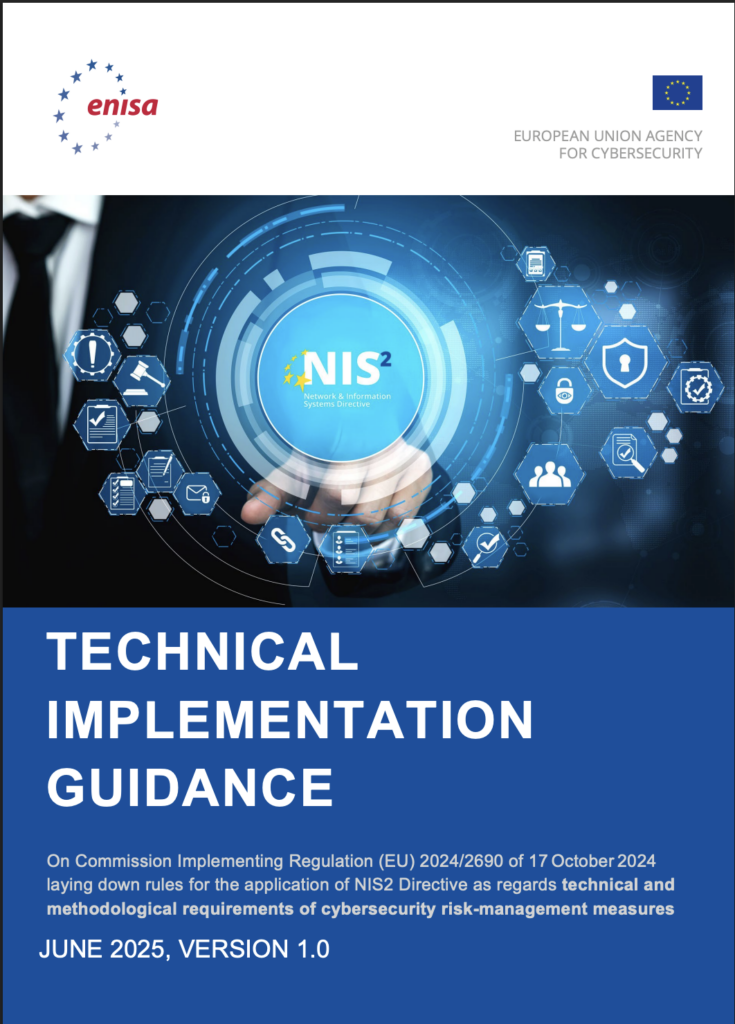
The current transitional phase will not last forever. As national laws settle and guidance matures, enforcement will become more consistent and more visible. The European Commission is expected to publish its first evaluation of NIS2 by October 2027, and sector-specific guidance—particularly for water and OT environments—is anticipated from ENISA and national authorities.
For the water supply sector, the message in 2026 is clear: cybersecurity is now inseparable from operational resilience and public trust. Utilities that treat NIS2 as a box-ticking exercise risk falling behind, while those that embrace it as a framework for long-term security and reliability will be better positioned to face an increasingly hostile cyber threat landscape.