
When the Rivers Rise: How Southeast Asia is Fighting Back Against the Flood
By: Rashidah Omar, Journalist, Asian Water
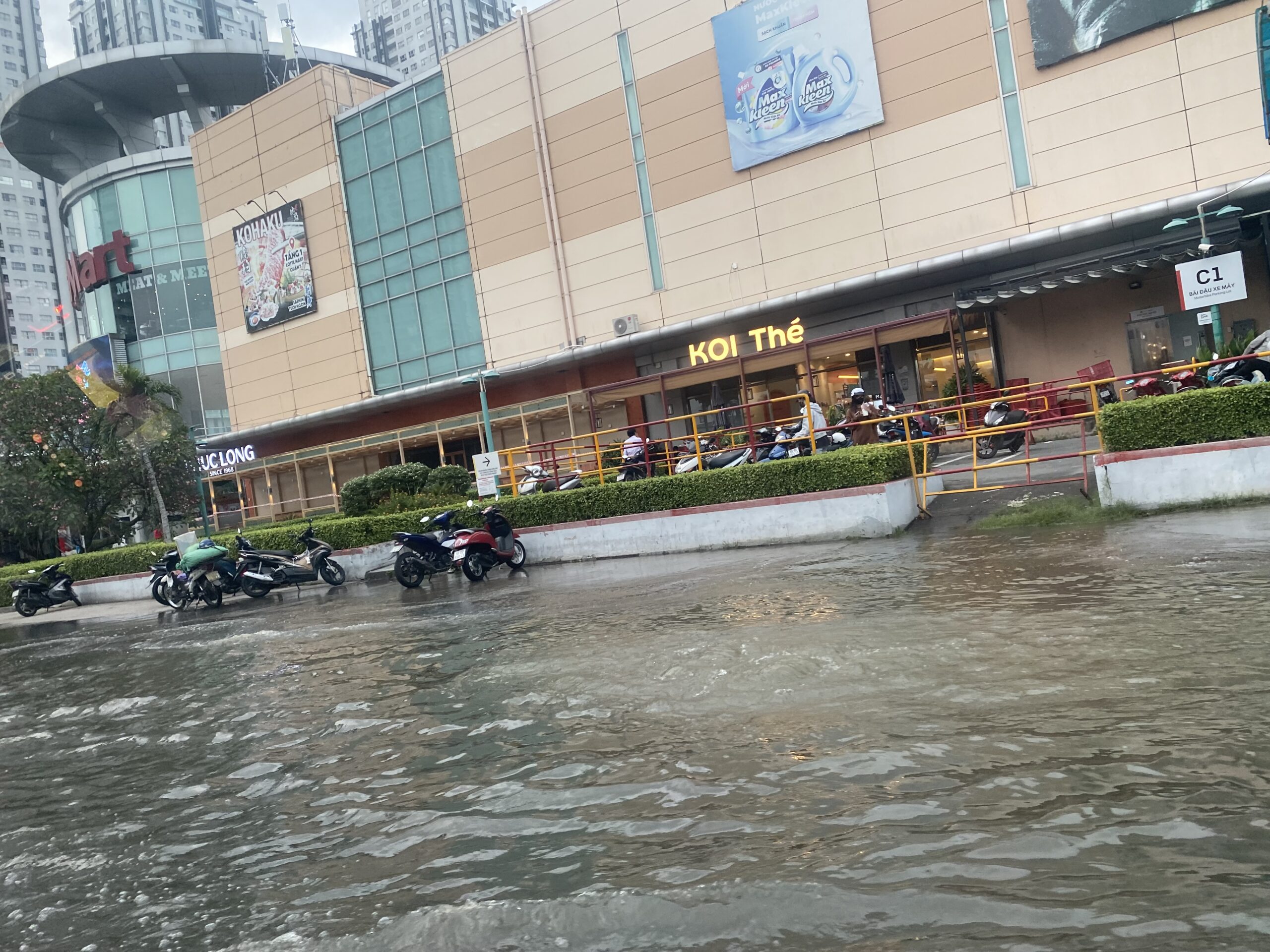
As Southeast Asia continues to surge forward with rapid economic growth and urbanisation, the region finds itself grappling with water challenge. Once revered and respected, the rivers and monsoons that nourished life are now viewed with growing concern. Across the archipelagos and deltas, from the Mekong River to the Klang River, floods are becoming more frequent, more destructive, and more complex to manage. The traditional wisdom that once guided communities in living alongside the monsoon has faded, replaced by sprawling urban developments and hardened landscapes that defy water’s natural paths.
Southeast Asia’s geography develops its weakness. The territorial waters of ASEAN cover an area nearly three times its landmass, and rivers pour into three major seas such the Pacific Ocean, Indian Ocean, and South China Sea. Historically, these waterways defined livelihoods and mobility, from riverine trade routes to coastal fishing villages. Yet today, these same waters threaten densely populated cities, industrial zones, and fragile ecosystems. The challenge is not only environmental but deeply cultural: how can societies rediscover balance with water in the age of climate change?
Flood Realities in a Changing Region
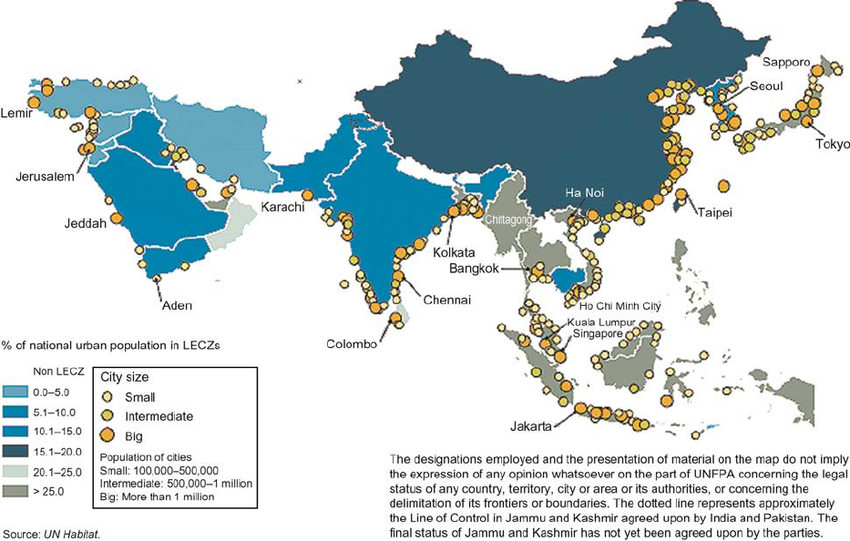
Climate change has altered the ferocity of water across Southeast Asia. Rising sea levels now increasing by more than 3mm annually in parts of Malaysia and are pushing tides further inland, eroding coastlines and salting farmland. More intense rainfall during the monsoon season is expanding flood-prone areas, with projections indicating that nearly 9 per cent of Malaysia’s land area could be susceptible to flooding by 2100. Urbanisation compounds the problem, sealing soils under concrete and diverting natural drainage. Meanwhile, forest loss and wetland degradation have stripped away the natural buffers that once absorbed seasonal flooding.
The result is a landscape under siege from both sky and sea. Coastal cities like Bangkok and Jakarta face the dual threat of land subsidence and tidal surge, while inland areas contend with swollen rivers and blocked drainage. The Dutch “Room for the River” concept, which encourages giving rivers more space rather than constraining them, is now inspiring Asian planners seeking solutions that balance engineering with ecology.
Malaysia’s Integrated Approach to Flood Mitigation
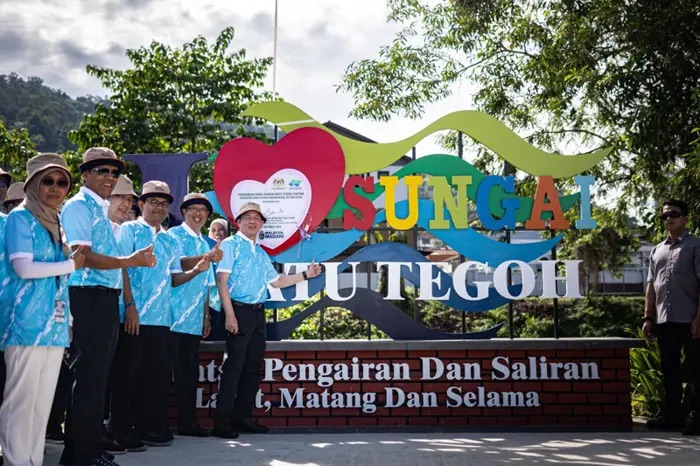
Malaysia’s approach to flood mitigation reflects both ambition and necessity. Over the past five years, the country has spent RM4.32 (USD1.03) billion on flood-related works, steadily increasing its annual budget to over RM1.3 (USD0.31) billion by 2025. The government is now accelerating RM22.86 (USD5.44) billion worth of projects under the Fifth Rolling Plan of the 12th Malaysia Plan, including the much-anticipated Kuching Flood Mitigation Project. This RM2 (USD0.48) billion initiative comprising a canal, bridge, and new barrage at Sungai Salak aiming to protect the coastal areas from overflow and saltwater intrusion during high tides.
Deputy Prime Minister Datuk Seri Fadillah Yusof announced that 55 new flood-mitigation projects are slated under the 13th Malaysia Plan (13MP) by 2030, expected to safeguard more than a million residents and an additional 1,400 square kilometres of land. The Sabah government has requested another RM800 (USD190.3) million for comprehensive prevention works, while the agriculture ministry has allocated RM55 (USD13.09) million to upgrade irrigation and drainage in vulnerable agricultural zones, especially in the east coast states.
Despite this strong investment path, challenges persist. Many projects face delays due to land acquisition, relocation of utilities, and overlapping administrative territories. Moreover, much of Malaysia’s urban drainage system is still based on outdated rainfall data, leaving major cities like Kuala Lumpur and Johor Bahru vulnerable to flash floods. Experts warn that infrastructure expansion, while crucial, cannot keep pace with the accelerating intensity of storms. The loss of mangroves and floodplains has also weakened the country’s natural resilience.
Table 1: Malaysia – Key Metrics and Targets
| Metric | Current / Baseline | Target / Change |
| Expenditure on flood mitigation (2021 – 2025) | RM 4.32 billion | >RM1.39 billion annually by 2025 |
| New projects under 13MP | 17 completed up to 2024 | 55 by 2030 |
| Residents to be protected | 154,000 | 1 million by 2030 |
| Additional land area protected | – | 1,400km² |
| Sabah allocation request | – | RM800 million |
Vietnam’s Sudden Struggle with Rising Waters
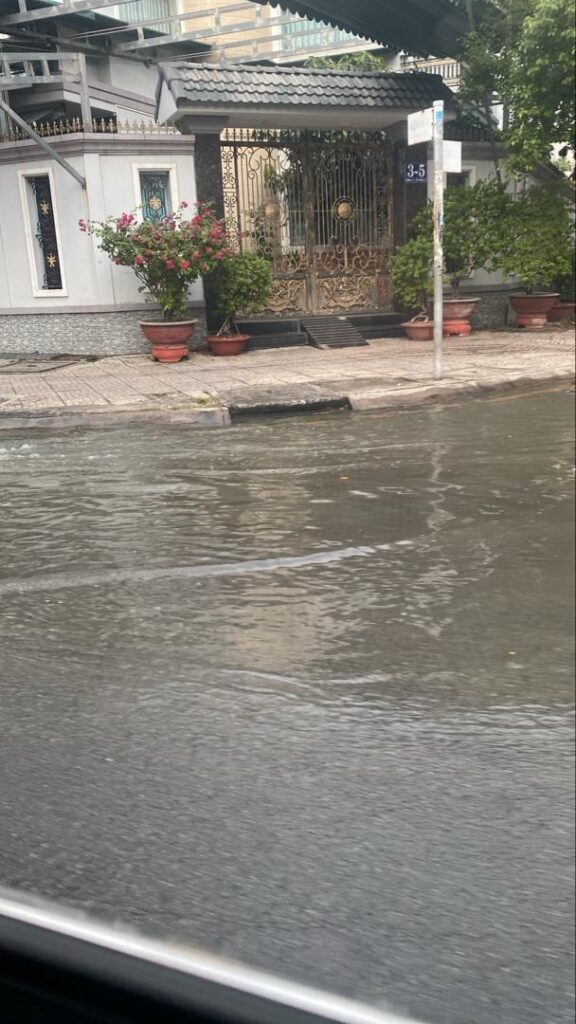
Vietnam’s struggle with floods has taken on new urgency in 2025, as extreme weather events have pushed river systems beyond their limits. In central Vietnam, the historic cities of Hue and Hoi An witnessed their worst floods on record this October 2025. Rainfall exceeded 1,085mm in 24 hours, the highest in national history, forcing the evacuation of more than 40,000 tourists and submerging parts of UNESCO heritage zones. Meanwhile, in Hanoi’s outskirts, swollen rivers overtopped embankments, displacing nearly 8,500 residents and threatening tens of thousands more.
These calamities follow a string of severe weather disasters. In July, Tropical Storm Wipha battered Nghe An province, destroying over 3,700 houses and washing away crops across more than 2,800 hectares of farmland. Barely two months later, Typhoon Bualoi struck northern and central Vietnam, claiming 19 lives and leaving 21 missing. The storm dumped more than 300mm of rain in a single day, triggering flash floods and landslides.
Vietnam’s experience highlights both the immediacy and complexity of the challenge. The country’s densely populated river deltas particularly the Red River and Mekong are inherently vulnerable, yet they underpin national food security and economic growth. Flood defences in cultural cities like Hue and Hoi An are further complicated by the need to preserve heritage structures. While Vietnam’s emergency response has been commendably swift, the frequency of such events suggests that adaptation, not just recovery, must now be the national focus.

Regional Directions: From Concrete to Coexistence
Across Southeast Asia, governments are realising that flood mitigation cannot rely solely on engineering. Countries are increasingly blending hard infrastructure with nature-based and governance solutions. Malaysia’s canal and barrage systems mirror Thailand’s intricate Chao Phraya drainage strategy, where pump stations, sluice gates, and flood-retention fields are deployed in coordination with tides. Indonesia, supported by international funding from the Asian Development Bank and World Bank, is modernising drainage in Jakarta and North Java while piloting “Nature-based Solutions” in river basins like Welang. These include reforestation, riparian rehabilitation, and community-based monitoring.

Improved weather forecasting is another cornerstone. Agencies like Malaysia’s MetMalaysia and Vietnam’s National Centre for Hydro-Meteorological Forecasting are upgrading systems for real-time alerts, helping communities prepare for flash floods. Beyond infrastructure, strict land-use policies and cross-border cooperation are becoming essential, as rivers such as the Mekong traverse multiple countries. The Netherlands continues to be a key partner in ASEAN flood resilience, providing expertise on surge barriers, dike relocation, and adaptive water management.
The Way Forward
The future of flood mitigation in Southeast Asia lies not just in building higher walls, but in re-learning how to live with water. As the Dutch model demonstrates, coexistence often offers greater resilience than confrontation. For Malaysia, this means integrating floodplains into urban design; for Vietnam, it requires balancing cultural preservation with adaptive defences. For both, it demands better enforcement, community participation, and regional collaboration.
Floods may never be fully prevented in a region defined by monsoons, but their devastation can be mitigated through foresight, innovation, and respect for the natural rhythms of water. The challenge is immense but so too is the region’s capacity for reinvention. As the waters rise, so must Southeast Asia’s resolve to adapt, together.
