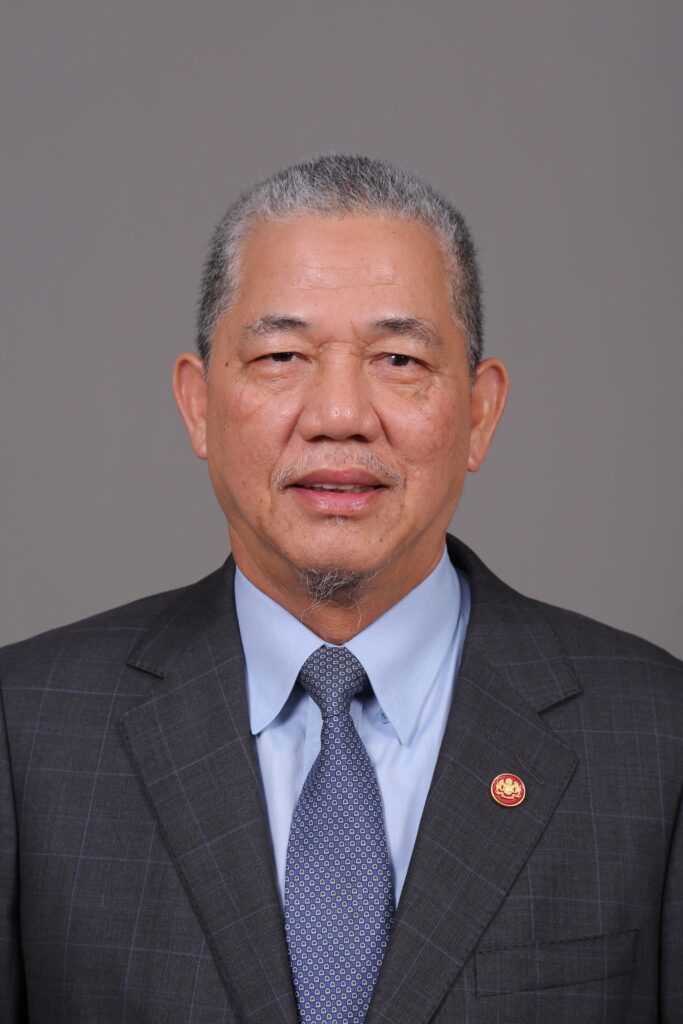
SPAH Initiative Promotes Sustainable Water Use, Serves as Backup Supply — Fadillah
The Rainwater Harvesting System (SPAH), introduced under the National Water Resources Policy and the Water Sector Transformation 2040 agenda, is aimed at strengthening sustainable water management, Deputy Prime Minister Datuk Seri Fadillah Yusof said, as reported by Bernama.
Fadillah, who is also the Minister of Energy Transition and Water Transformation (PETRA), explained that the initiative helps reduce reliance on treated water, serves as an alternative supply during disruptions, and consumes less energy than conventional water sources.
“In line with efforts to build a sustainable and resilient water resource management system, the ministry, through the National Water Research Institute of Malaysia (NAHRIM), has rolled out several key measures to promote the widespread adoption of SPAH among communities, government facilities and the private sector,” he said during a recent oral question-and-answer session in the Dewan Negara.
He was responding to a question from Senator Datuk Rosni Sahar on PETRA’s strategy to harness rainwater as an alternative supply during dry periods.
As an example, Fadillah highlighted the NAHRIM Tank Software 2.0, developed in 2021, which offers online simulations to determine optimal tank sizes and evaluate storage efficiency and potential water savings.
He added that a master plan study for a Conjunctive Water Supply System in Kuala Lumpur, conducted in 2017, assessed the potential of alternative water sources in urban settings.
Fadillah also noted that the Ministry of Housing and Local Government amended the Uniform Building By-Laws 1984 in 2011 to mandate SPAH installation in buildings, a move later adopted by 11 states in Peninsular Malaysia.
To date, 16 physical SPAH projects have been implemented at government and private premises, residential areas and communities, including commercial buildings. These projects, initiated since 2001, involve the installation of tanks, retention ponds and Internet of Things (IoT) monitoring systems, benefiting more than 1,000 users.
According to NAHRIM research, SPAH has contributed to reducing the risk of urban flash floods and can cut treated water consumption by up to 30 percent. A study in Taman Wangsa Melawati showed a reduction in peak rainwater discharge of between 10 and 20 percent, while research in the Sungai Damansara Basin found that widespread adoption of SPAH could reduce flooding by 35 to 50 percent, depending on storage capacity.
Fadillah said PETRA will continue assessing the initiative through impact studies from pilot projects that upgrade flood retention ponds for water supply, as well as through studies on consumer acceptance.
Addressing a supplementary question on potential subsidies, financial assistance or tax incentives to encourage household adoption of SPAH, he said the matter would be discussed with the Ministry of Finance.
He added that all new SPAH projects will include rainwater storage tanks for conservation purposes, emphasising that the harvested water is intended for non-potable uses such as gardening and car washing.
By capturing rainwater and reducing runoff, SPAH helps mitigate flooding risks, particularly in urban areas.
Datuk Seri Fadillah Yusof, Deputy Prime Minister & Minister of Energy Transition and Water Transformation (PETRA)