From Dialogue to Deployment: Collaborative Pathways for Resilient and Inclusive Utilities in Asia
Making Every Drop Count in a Systemic, Data-Driven Water Future
The Smart Water Networks Forum (SWAN) is a global non-profit organisation dedicated to advancing smart technologies in the water sector, bringing together utilities, solution providers and industry experts to promote digital transformation, data-driven decision-making and more efficient water management. Through its global forums, workshops and knowledge-sharing platforms, SWAN fosters collaboration between utilities, technology providers and industry leaders to accelerate the adoption of smart water networks. Through its platforms and engagements, SWAN addresses key challenges such as non-revenue water (NRW), ageing infrastructure and climate resilience, supporting utilities in improving performance and sustainability.
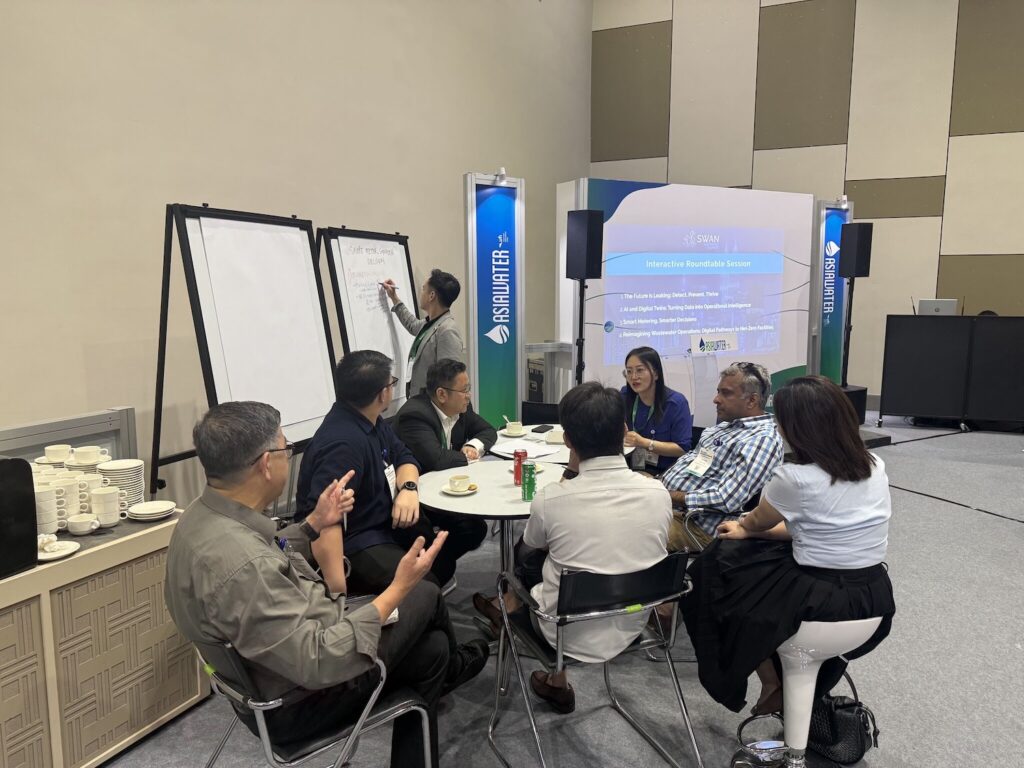
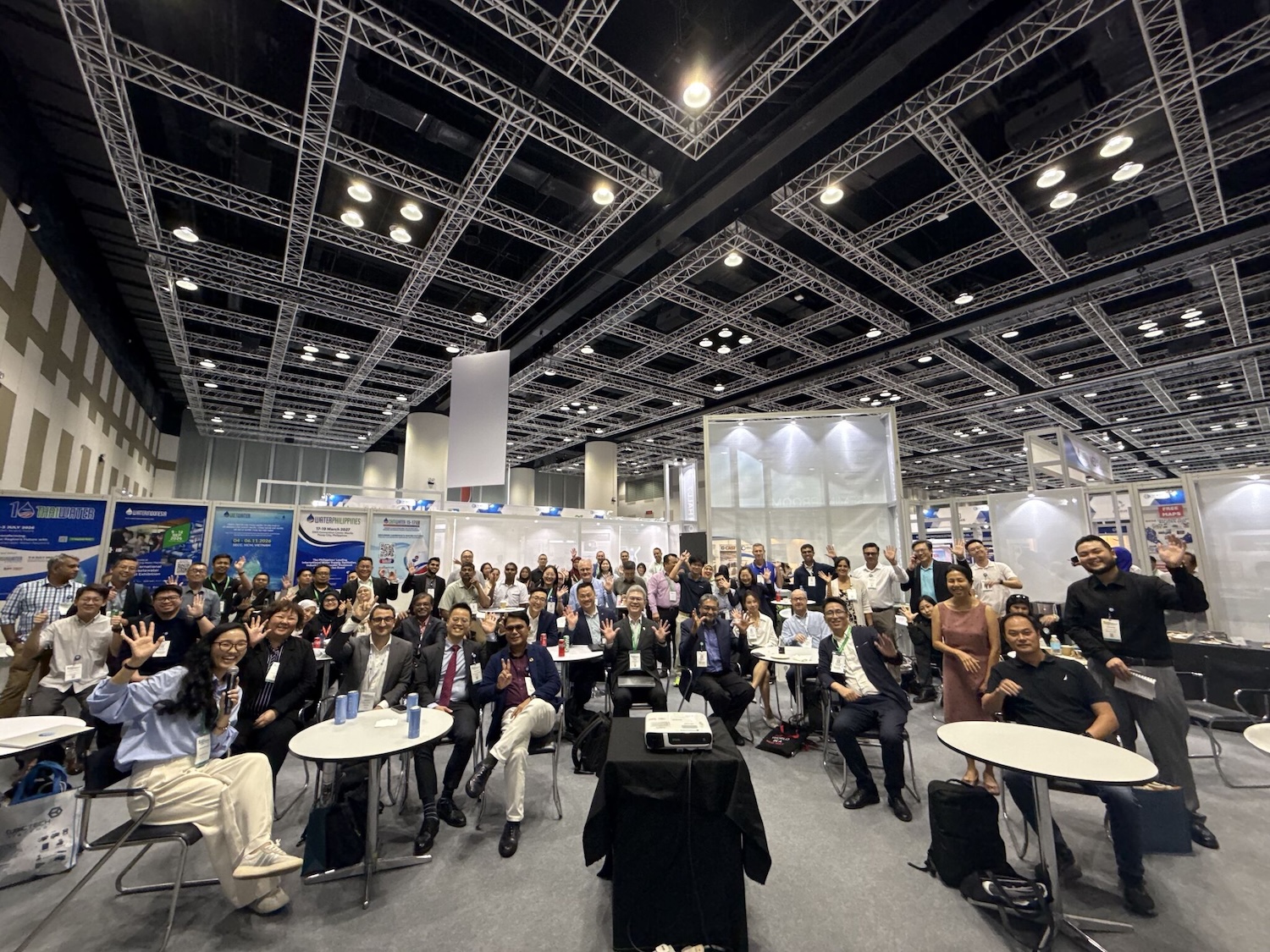
Against this backdrop, the ASIAWATER 2026 SWAN Workshop provided a focused platform to examine one of the sector’s most persistent issues. Structured as an interactive, multi-format session, the workshop combined keynote insights, panel discussions and facilitated roundtables to encourage active participation and practical exchange, bringing together utilities, technology providers and industry experts to move beyond high-level dialogue toward actionable, real-world solutions. This enabled stakeholders to engage directly with operational challenges, real-world case studies and emerging solutions.
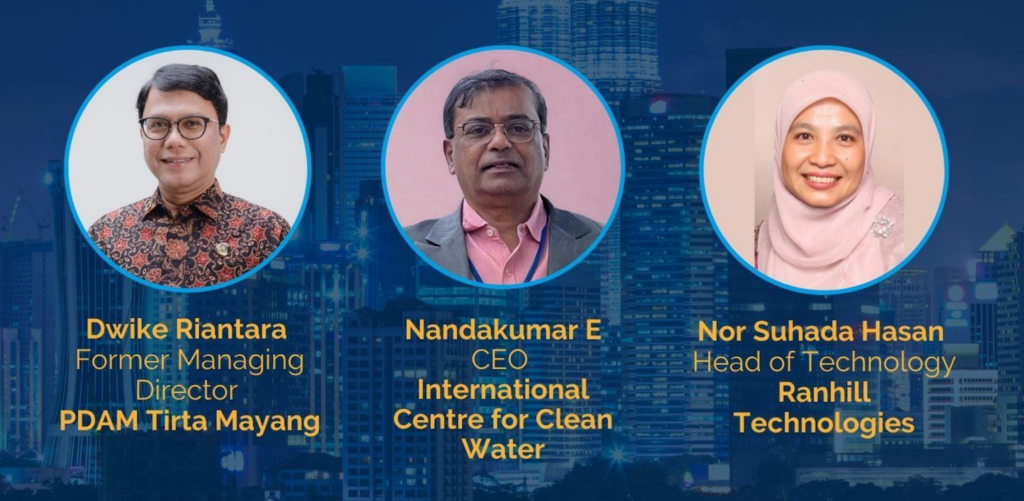
Non-Revenue Water (NRW) has emerged as one of the most pressing yet often overlooked challenges in the water sector across Asia. At the workshop, industry leaders and experts shed light on the scale, causes and solutions to this issue. Among the key presenters were Nor Suhada Hasan, Head of Technology at Ranhill Technologies; E. Nandakumar, CEO of ICCW at IIT Madras; and Dwike Riantara from the Indonesia Water Club. Their insights collectively highlighted that NRW is not just a technical issue, but a systemic and ongoing challenge requiring sustained attention.
From Invisible Losses to Smart Solutions: Rethinking NRW Management for a Sustainable Future
The keynote speech by Lee Chin Shyan, Senior Director, Standard Technical & Compliance Section, National Water Services Commission (SPAN), at the ASIAWATER 2026 – SWAN Workshop set a compelling tone for discussions on non-revenue water (NRW) and the broader challenges facing water utilities in Asia. His address emphasised that NRW is not merely a technical issue, but a systemic and strategic challenge that reflects inefficiencies in infrastructure, governance and long-term planning.
A key strength of the keynote was its clear framing of NRW as an “invisible crisis”—water that is treated and distributed but never reaches consumers. By highlighting the scale of losses and their financial and environmental implications, Lee underscored the urgency for utilities to shift from reactive fixes to proactive, continuous management approaches. He stressed that one-off investments, such as pipe replacement, are insufficient without sustained operational strategies and data-driven decision-making.
Another important takeaway from the speech was the role of digital transformation. Lee advocated for the integration of smart technologies—such as sensors, real-time monitoring systems and analytics platforms—to improve network visibility and enable faster response to leaks and inefficiencies. This aligns with the broader theme of building resilient and future-ready water systems.
Overall, the keynote was insightful and forward-looking, effectively bridging policy, technology and operational perspectives. It served as a strong call to action for stakeholders to rethink how water systems are managed, and to commit to long-term, adaptive solutions in ensuring sustainable water supply.
The Scale of the Problem in Malaysia
Presenting Malaysia’s perspective, Nor Suhada Hasan described NRW as a “hidden water loss” embedded within the distribution system. As of Q2 2025, Malaysia’s NRW level stood at 34.7%, equivalent to approximately 5,610 million litres per day (MLD) of treated water lost. This results in an estimated RM2 billion in annual revenue losses.
The magnitude of this loss is striking—it could supply more than half of Malaysia’s population, roughly 18 million people. Despite continuous investments, NRW levels have remained persistently high over the years. The national target is to reduce NRW to 28.8% by 2030, which requires a 5.9% reduction or about 954 MLD of recovered water. However, achieving even a 1% reduction may cost up to RM1 billion, illustrating the financial intensity of NRW mitigation.
Root Causes and Structural Challenges
According to Nor Suhada Hasan, one of the biggest contributors to NRW in Malaysia is ageing infrastructure. The country has around 40,000 km of asbestos cement pipes, many of which are deteriorating and prone to leakage. Replacing them could cost between RM40 billion and RM60 billion, and at the current rate, it may take decades to complete.
Additional challenges include increasing water demand, which forces utilities to balance supply expansion with loss reduction. Financial limitations constrain both capital and operational investments, while external factors such as climate risks and low reserve margins further complicate the situation. Poor installation quality in new developments also introduces early-stage leakages, worsening the NRW problem.
These interconnected issues reinforce the idea that NRW is not a one-time goal but a continuous evolving journey.
Moving Beyond One-Time Solutions
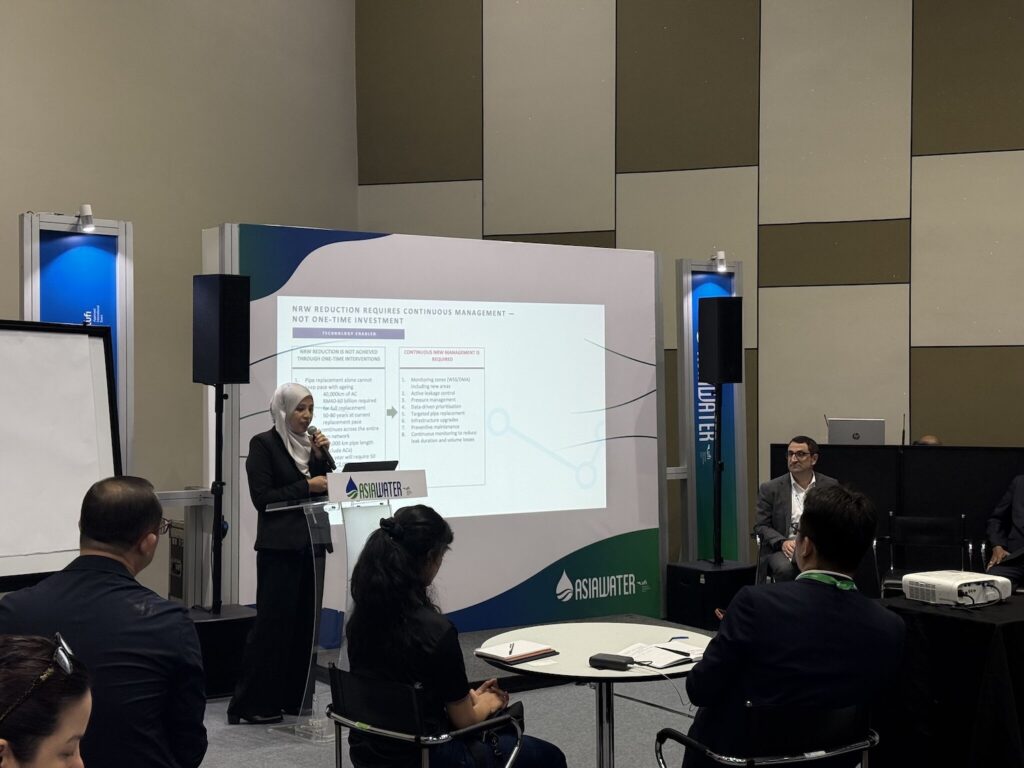
A central message from the workshop was that NRW reduction cannot rely solely on infrastructure replacement. Instead, it requires continuous, technology-enabled management.As highlighted in the second keynote by Mohamad Hairi Basri, “technology alone is not a silver bullet… this is where collaboration becomes the most critical factor in our success.”
Key strategies include establishing District Metered Areas (DMAs), implementing active leakage control, managing pressure levels and prioritising maintenance based on real-time data. Technologies such as smart meters, sensors, GIS mapping and centralised monitoring systems enable utilities to detect and address losses more efficiently.
Nor Suhada Hasan emphasised that “continuous NRW management bridges the gap between ageing infrastructure and sustainable water supply,” highlighting the need for ongoing operational improvements rather than isolated interventions.
Lessons from Johor: Continuous Improvement in Action
The case of Johor provides a practical example of how sustained efforts can yield results. Through progressive implementation of monitoring systems, the state expanded its network from hundreds to over 1,100 DMAs, alongside increased deployment of sensors, pressure management systems and leak detection technologies.
These initiatives have enabled utilities to repair thousands of leaks annually, with some periods recording up to 7,000 repairs per year. The adoption of smart platforms such as AquaSMART and the establishment of command centres have further strengthened operational capabilities.
This example underscores that NRW reduction is a gradual process achieved through consistent effort, data utilisation and technological integration.
The Cost of Inaction
The consequences of failing to address NRW are significant. Simulations indicate that without intervention, water losses and financial impacts will continue to rise sharply. In Johor alone, losses could reach RM300 million annually by 2030, escalating to RM1.2 billion by 2040.
Beyond financial implications, high NRW levels strain water resources, increase energy consumption and contribute to environmental degradation. In a region facing growing water demand and climate uncertainty, reducing NRW is critical for sustainability.
Regional Insights: India’s Systemic Challenge
E. Nandakumar contextualised India’s non-revenue water (NRW) challenge within a broader systemic framework, noting that urban losses are estimated at 40%–60%. This corresponds to approximately USD5 billion in annual revenue loss and 45 billion litres of treated water lost daily, underscoring the scale of inefficiency alongside persistent gaps in equitable water access.
The analysis emphasised that NRW in India is not solely a technical issue, but a function of structural constraints, including ageing infrastructure, limited data visibility and institutional fragmentation. Contributing factors such as unauthorised connections, metering inaccuracies and siloed system management further compound the problem.
Policy responses under programmes such as AMRUT 2.0 and the Smart Cities Mission signal a shift towards data-driven water governance. These initiatives prioritise the deployment of smart metering, IoT-enabled monitoring and improved system diagnostics to enhance operational transparency and accountability.
Current interventions reflect a range of technological and operational approaches, including IoT-based district metered areas (DMAs), non-invasive pipe inspection technologies and digital water accounting platforms. Emerging solutions also target demand management, pressure optimisation and water quality monitoring.
Nandakumar highlighted the importance of standardising NRW measurement, strengthening collaboration between utilities and technology providers, and improving data transparency to support more informed decision-making. He noted that scaling validated pilot interventions and establishing consistent benchmarking across urban systems are critical to driving long-term performance improvements. This includes expanding proven solutions across cities, supported by more transparent and accessible data frameworks that enable replication, accountability and sustained impact.
Indonesia’s Digital Transformation Journey
Dwike Riantara offered insights into Indonesia’s water utilities, where NRW averages around 35%. Many utilities still rely on manual processes, with limited real-time monitoring and fragmented data systems.
He highlighted that digital transformation is key to improving efficiency and reducing losses. Technologies such as smart metering, GIS and data analytics can enable better decision-making and operational control. However, progress is often slowed by financial constraints, lack of technical expertise and organisational resistance.
A key takeaway from Indonesia’s experience is the importance of starting small—focusing on a specific problem, proving value and then scaling up solutions. This practical approach helps utilities manage risks while building confidence in digital investments.
The Way Forward: A Continuous Journey
Collaboratively bringing together utilities, solution providers and experts, the ASIAWATER 2026 SWAN Workshop reinforced that NRW management is not a one-time goal but an ongoing journey. Investments should be evaluated not only by immediate returns but also by the long-term losses avoided.
Moving forward, utilities must prioritise:
- Enhanced network visibility through smart monitoring
- Sustained financial and institutional support
- Adoption of data-driven and predictive technologies
- Collaboration between stakeholders
- A culture of continuous improvement
As emphasised by the presenters, making every drop count requires persistence, innovation and strategic planning. NRW may be an invisible challenge, but its impact is real—and addressing it is essential for securing a sustainable water future in Asia. Workshops like this demonstrate that through collaboration, innovation and sustained commitment, meaningful progress is already underway. This progress that, as highlighted in the keynote, reinforcing a simple yet powerful truth: “the future of water is smart, resilient, and above all, collaborative.”