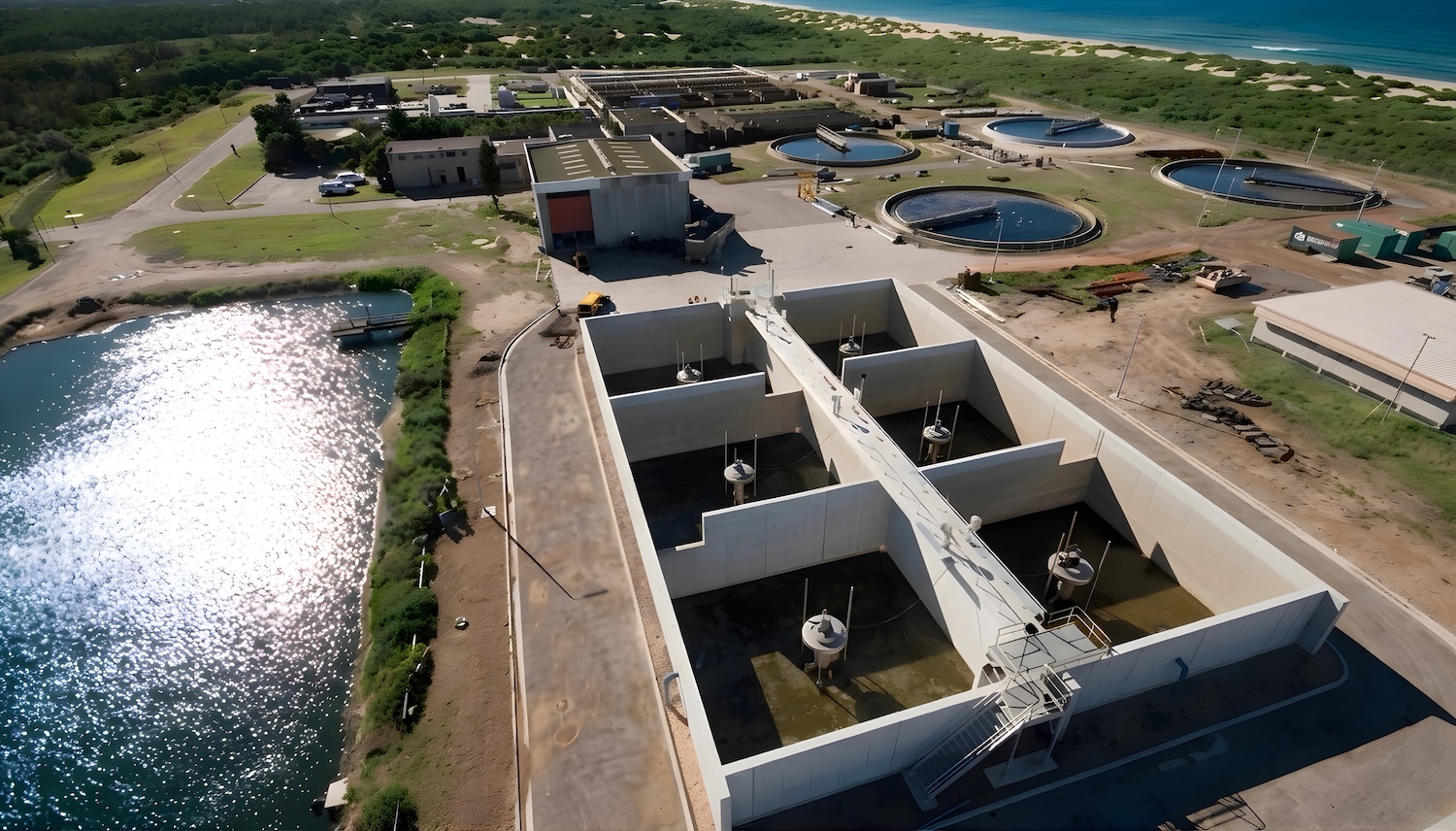
Securing More from What Already Exists: Veolia’s Digital Optimisation Solution Unlocks New Capacity and Defers AUD8 million CAPEX at Belmont Wastewater Treatment Works
In wastewater treatment, capacity has long been synonymous with construction. When inflows rise or compliance margins narrow, the default response is to build more. Yet as rainfall patterns become more intense and less predictable, and capital decisions face greater scrutiny, that assumption is increasingly being tested.
Water security is no longer a background concern—it is a frontline challenge. As climate change accelerates droughts, floods and extreme weather events, wastewater treatment infrastructure must become more resilient and adaptive, reliably handling volatile inflow patterns while maintaining compliance and protecting water quality. At Belmont Wastewater Treatment Works, those pressures are not abstract. The plant serves a catchment of roughly 100,000 residents around Lake Macquarie, an area where heavy rainfall, rapid runoff and coastal influences can combine to produce sharp, fast-moving inflow surges. During storm events, flows rise quickly, testing the system’s ability to respond before conditions stabilise downstream.
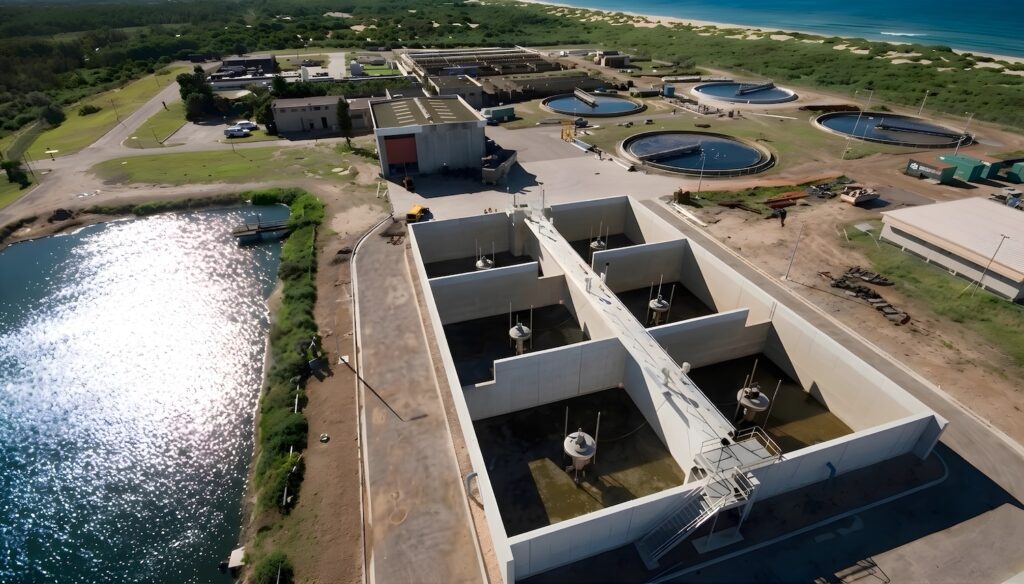
Under dry-weather conditions, Belmont’s core treatment processes performed reliably. During wet weather, however, elevated hydraulic loading repeatedly pushed the clarifiers toward their operating limits. The risk of solids, washout increased, placing sustained pressure on downstream processes and regulatory compliance. Operators relied on experience and manual intervention to maintain stability, but as wet-weather events became more severe, the available operating margin continued to narrow.
Historically, the response would have been straightforward: build more capacity. Additional clarifiers and flow-splitting infrastructure would provide headroom during peak events, restoring confidence under extreme conditions. Yet at Belmont, the case for expansion was harder to justify. Peak wet-weather stress was severe but episodic, making permanent, capital-intensive construction a disproportionate response. The challenge facing Hunter Water and its operating partner, Veolia, was how to manage these surges without locking long-term capital into infrastructure sized for short-lived extremes—and how to do so in a way that keeps essential services running, no matter what.
The decision to avoid AUD8 million in CAPEX
A traditional upgrade path—constructing new clarifiers alongside associated civil works—would require an investment of approximately AUD8 million (EUR5 million), with months of construction activity inside a live wastewater facility. While technically sound, the approach would lock capital into fixed assets designed to address peak conditions that occurred only episodically. Belmont’s coastal location would further complicate delivery, with excavation in sandy soils required in close proximity to existing services and infrastructure.
Instead of moving directly toward expansion, Hunter Water and Veolia explored whether existing assets were capable of more. The discussion shifted from how to add capacity to how existing capacity was being utilised, particularly during storm-driven flow events when process stability mattered most.
This marked a strategic pivot, and one consistent with Veolia’s broader approach to environmental security: anticipating needs before crises strike and innovating rather than defaulting to the familiar. Rather than viewing digital optimisation as a supplementary tool, the project team treated it as a potential alternative to construction. The premise was simple but untested at this scale: if operators could anticipate process stress earlier, and if control strategies could respond faster and more precisely than manual intervention alone, could the plant ride though wet-weather surges without breaching performance limits?
Answering than question required moving beyond static setpoints and reactive alarms toward a more dynamic understanding of plant behaviour in real time. Only once that context was established did technology enter the picture.
What the data unlocked
The deployment of Veolia’s Hubgrade Wastewater Plant (HWP) Performance platform enabled continuous analysis of real-time operating conditions across the biological treatment process. Rather than replacing existing control systems, the platform sat above them, interpreting incoming data and adjusting key parameters—such as aeration, pumping and recirculation—to prevent overload during peak flows.
Critically, these adjustments were not made in isolation. Hubgrade Performance evaluated how changes in one part of the process affected others, allowing the system to stabilise biological performance as inflows rose. As a result, stress on pumps and blowers was moderated, and the system absorbed sudden hydraulic shocks without triggering cascading operational issues.
The impact was most visible during storm events. Clarifiers that previously operated close to failure thresholds maintained their stability, achieving a measured 23% increase in solids-flux capacity under wet-weather conditions. This improvement reduced the risk of washout and helped preserve compliance even as inflows surged.
Energy use also shifted. Dynamic aeration control lowered daily energy consumption from approximately 2,070kWh to 1,440kWh, contributing to an overall site energy reduction of around 15%. While energy savings were not the primary objective, they reflected a more disciplined matching of process intensity to actual demand rather than worst-case assumptions.
More importantly, capacity gains did not hinge on a single control change. Better-tuned return activated sludge (RAS) control worked in tandem with Belmont’s existing stormwater-mode safeguards, which retain sludge in aeration tanks through intermittent aeration and mixing during high-flow events. Together, these mechanisms expanded the plant’s effective operating envelope, support the decision to defer major capital works.
For operators, the shift was equally significant. Instead of reacting to alarms as conditions deteriorated, teams gained earlier visibility into emerging constraints and clearer guidance on how the process would respond. Manual expertise remained central, reinforced by predictive insight rather than time-critical intervention alone. Operators retained full control, with the ability to revert to standard manual operation easily, whenever required.
Beyond concrete solutions
Belmont’s experience illustrates how optimising treatment processes—and improving how systems respond to wet-weather surges—can remove the immediate need for major capital expansion. By stabilising biological performance during storm events, the plant was able to manage higher hydraulic loads without constructing new clarifiers or flow-splitting infrastructure, avoiding an estimated AUD8 million in capital expenditure.
More significantly, the outcome reframed what capacity means in a modern wastewater context, Instead of being defined solely by physical headroom, capacity emerged as something that could be shaped through deeper system understanding and more adaptive operation. By extracting greater resilience from existing assets, the plant achieved levels of assurance once associated only with expansion—maintaining compliance, easing operational pressure and moderating energy use within its existing footprint. This is environmental security in practice: strengthening resilience and performance nit by building more, but by doing more with what already exist.
For a wider industry, the implications extend beyond Belmont. As utilities contend with increasingly volatile inflow patterns and tighter regulatory expectations—pressures that will only intensify as climate change accelerates—the ability to adapt dynamically rather than build defensively offers an alternative way forward. Digital optimisation does not eliminate the need for capital works altogether, but it can change the order of decisions, clarifying what is possible before new infrastructure is committed. The same approach is also relevant for treatment plants seeking to improve energy efficiency while maintaining compliance. By aligning process intensity more closely with real-time demand, optimisation supports operational discipline without compromising performance.
In essence, the project embodies both the intent of Veolia’s GreenUp programme and its wider mission as the innovation powerhouse for critical needs—achieving environmental outcomes and operational gains by making better use of existing resources. At Belmont, progress came not from physical expansion, but from understanding the system more deeply and allowing data to guide how it responds when conditions are at their most demanding. It is a reminder that in a world where resources are no longer a given, the most powerful solutions are often those that unlock what is already there.