
Uzbekistan Advances 2027–2050 Strategy to Strengthen Long-Term Water Security
Uzbekistan is preparing a long-term strategy for the rational use and protection of its water resources, setting out a framework for sustainable water management from 2027 to 2050 amid growing concerns over water scarcity, climate change and increasing demand.
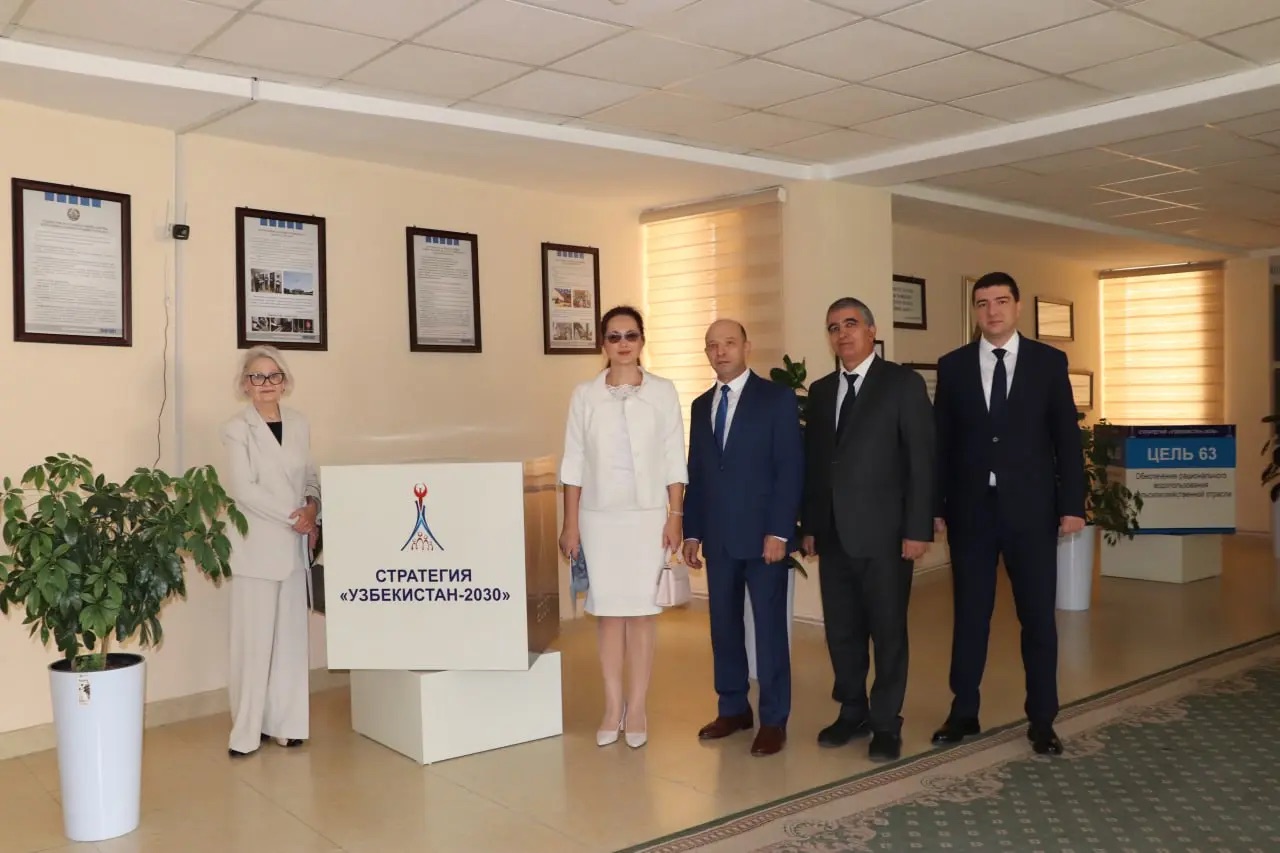
The proposed Strategy for the Use and Protection of Water Resources of the Republic of Uzbekistan for 2027–2050 is being developed in collaboration with a group of Russian scientists led by Vladimir L. Kvint, Academician of Lomonosov Moscow State University and a prominent expert in strategic planning.
The initiative was announced by the Ministry of Water Resources following a training session attended by Russian experts, where participants discussed strategic planning methodologies and the key considerations involved in developing a long-term water sector policy.
Opening the session, Minister of Water Resources Shavkat Khamraev outlined the reforms undertaken by Uzbekistan under the leadership of President Shavkat Mirziyoyev, highlighting recent legislative and institutional developments aimed at improving water governance and strengthening the country’s irrigation sector.
Among the key milestones is the adoption of the country’s first Water Code in July 2025, alongside the approval of the Water Resources Management and Irrigation Sector Development Programme for 2025–2028. The programme establishes targets, implementation measures and funding arrangements to improve water resource management and modernise irrigation infrastructure.
Long-term planning amid growing water pressures
The proposed 2027–2050 strategy comes as Uzbekistan faces mounting pressure on its water resources. Agriculture accounts for approximately 90% of national water consumption, making efficient irrigation and improved water distribution central to the country’s economic and environmental priorities.
Much of the country’s water supply is drawn from the Amu Darya and Syr Darya river systems, which are also shared with other Central Asian countries. Declining glacier-fed flows, changing precipitation patterns, rising temperatures and more frequent droughts are expected to intensify competition for increasingly limited water resources.
According to the World Bank, climate-related changes could reduce water availability in Uzbekistan by 30–40% while increasing irrigation demand by 25%, underscoring the need for more efficient infrastructure, stronger governance and climate-resilient water management.
During the September 2025 training session, Academician Kvint and the Russian scientific delegation presented their perspectives on the importance of strategic planning, including methodologies for establishing long-term development priorities and translating them into practical implementation measures.
Irrigation modernisation and digital water management
The long-term strategy builds on Uzbekistan’s ongoing water sector reforms, including the 2025–2028 programme, which targets improvements in irrigation infrastructure, water conservation, energy efficiency and digital monitoring.
The programme provides for the reconstruction of 2,551km of irrigation networks and the replacement of outdated pumping equipment with more energy-efficient systems. It also targets the expansion of water-saving technologies across agricultural land, including drip irrigation, alongside the introduction of automated monitoring and control systems.
Other measures include modernising equipment at major hydraulic facilities, installing monitoring systems at pumping stations and hydrological facilities, and strengthening digital water accounting to improve transparency and operational efficiency.
The government expects these measures to help conserve up to 14 billion cubic metres of water annually by 2028 through improved efficiency and reduced losses.
International development partners are also supporting the country’s infrastructure modernisation efforts. In May 2025, the World Bank approved a USD200 million concessional credit, alongside USD23.2 million in government co-financing, to modernise irrigation and drainage infrastructure across five regions.
The project includes upgrading major canals, installing hydraulic structures and introducing flow measurement and SCADA systems. It is expected to reduce annual water losses by approximately 540 million cubic metres and save more than 165 million kWh of electricity annually.
Strategy development moves into next phase
The longer-term planning initiative gained further momentum in February 2026, when the first phase of the National Strategy for the Rational Use of Water Resources and Environmental Protection in Uzbekistan for 2027–2050 was presented at the Central Asian University for Environmental and Climate Change Studies (Green University).
The presentation, attended by Academician Kvint and professors from Lomonosov Moscow State University, outlined the strategic planning methodology, including assessments of global, regional and national trends, the formulation of strategic priorities and the development of implementation roadmaps.
The proposed strategic framework covers several priority areas, including improved water resource governance, innovative water treatment technologies, environmental protection, circular economy development, green energy transformation and professional capacity-building.
The strategy is intended to strengthen coordination between government institutions, businesses and society in promoting responsible water use while supporting Uzbekistan’s environmental sustainability objectives and regional leadership ambitions.
As Uzbekistan moves towards its 2027–2050 planning horizon, the strategy is expected to provide a longer-term framework for aligning water infrastructure investment, institutional reforms, technological innovation and environmental priorities. Its implementation will be particularly important in addressing the country’s growing water challenges and ensuring the sustainable management of resources for future generations.