
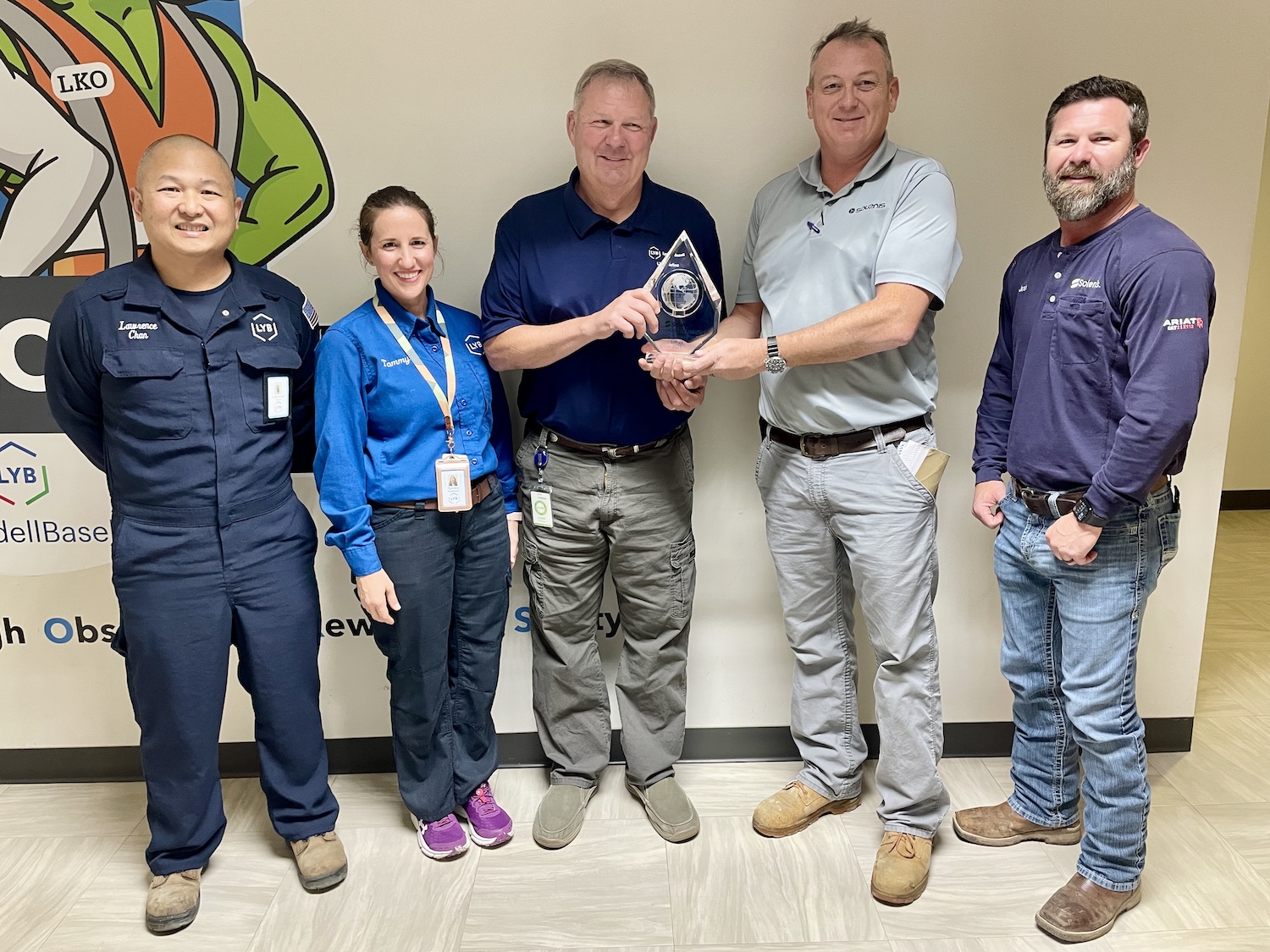
Lyondellbasell Recognised with 2025 Solenis Sustainability Award for Advancing Water Stewardship and Operational Efficiency
Solenis recently announced that LyondellBasell (LYB) Utilities, Offsites and Infrastructure team at Louisiana Integrated PolyEthylene, a Lake Charles facility LYB operates through its joint venture with Sasol, has been recognised with the 2025 Solenis Sustainability Award for its integrated, data‑driven approach to improving water efficiency, protecting critical assets and enhancing operational reliability.
Through close collaboration and the application of advanced chemistry, monitoring and control strategies, LyondellBasell achieved measurable improvements in water stewardship and system performance. This project demonstrates how disciplined water management can deliver meaningful environmental benefits while supporting long‑term operational value.
Ed Connors, Chief Business Officer, Americas, Solenis
In collaboration with Solenis, LYB implemented a series of optimisation initiatives across raw water treatment, cooling water and wastewater systems, delivering the following sustainability benefits:
- Water conservation: Reduced raw water backwashing and increased reuse efforts saved more than 190 million gallons of water, lowering freshwater withdrawal and discharge
- Chemical optimisation: Improved monitoring and process control reduced treatment chemical usage while maintaining stable system performance
- Asset protection: Cooling water corrosion rates were reduced by up to 87 per cent, extending equipment life and avoiding premature replacement
- Operational efficiency: Enhanced system resilience during variable river conditions reduced process upsets, maintenance requirements and downtime
- Data‑driven performance: Real‑time monitoring enabled proactive decision‑making and continuous improvement across water systems
Established in 2020, the Solenis Sustainability Awards recognise specific and verifiable customer projects that have, over a period of 12 months, delivered measurable results against at least one of five sustainability indicators: reduced water use, reduced energy consumption, decreased greenhouse gas emissions, optimised raw material utilisation or reduced waste.