
Why Practical Engineering Experience Still Matters in the Age of Digitalisation and AI
By Sai Kit Chee, Independent Water, Wastewater & Air Pollution Consultant,
Email: envrtpl@gmail.com
Introduction
The water and wastewater industry is entering a new era driven by digitalisation, automation, artificial intelligence (AI) and smart technologies. Across Asia and the world, utilities and industrial plants are increasingly adopting advanced monitoring systems, predictive analytics, digital twins and AI-assisted optimisation tools to improve efficiency and reliability.
Today, engineers can simulate treatment processes, predict equipment failures, monitor energy consumption in real time and optimise plant performance using sophisticated software platforms. With the rapid advancement of AI, some even predict that engineering design and operational decision-making may eventually become largely automated.
While these technologies undoubtedly offer significant benefits, there remains one critical factor that technology alone cannot replace: practical engineering experience.
In the water and wastewater industry, real-world operating conditions are often far more complex than theoretical models or software simulations suggest. Successful projects still depend heavily on experienced engineers who understand not only calculations and process theory, but also the practical realities of construction, commissioning, operation, maintenance and human behaviour.
The Growing Role of Digitalisation in Water Projects
Over the last decade, digital technologies have transformed many aspects of the water industry.
Modern treatment plants now incorporate:
- SCADA systems with extensive real-time monitoring
- Advanced PLC and DCS control systems
- AI-based predictive maintenance
- Digital twins and hydraulic modelling
- Remote operation and cloud-based monitoring
- Energy optimisation algorithms
- Smart instrumentation and sensors
These technologies have improved plant reliability, energy efficiency, operator awareness, alarm management and predictive maintenance capabilities.
There is no doubt that digitalisation has become an essential part of modern water infrastructure.
However, despite these advancements, many projects still encounter serious operational and commissioning problems that technology alone cannot solve.
The Gap Between Simulation and Reality
Engineering software and AI models are built based on assumptions, design parameters and mathematical relationships. While useful, these tools cannot always accurately predict real-life plant behaviour under dynamic operating conditions.
In actual projects, engineers frequently encounter issues such as hydraulic imbalances, air locks, valve hunting, instrument drift, uneven flow distribution, sludge accumulation, operator intervention errors, delayed actuator response and poor integration between equipment vendors.
These issues often arise not because the calculations are incorrect, but because practical site conditions differ from theoretical assumptions.
For example, pumping system software may predict stable operation based on the pump curve and system head calculations. However, during commissioning, unexpected suction conditions, air entrainment, inadequate NPSH margin, or piping modifications may result in cavitation, vibration, excessive noise and reduced pump performance.
Similarly, aeration system models may indicate that the required oxygen transfer can be achieved with a certain airflow rate. In actual operation, diffuser fouling, uneven air distribution, blower control instability, or varying wastewater characteristics can significantly reduce oxygen transfer efficiency and affect biological treatment performance.
Another common example is process instrumentation. Control simulations generally assume that instruments provide accurate and reliable measurements. In reality, sensor fouling, calibration drift, electrical noise, communication delays and improper installation can cause inaccurate readings, leading to unstable control loops and unexpected plant behaviour.
These are not problems that can always be predicted purely through software models or AI algorithms. They require practical understanding gained through site experience, commissioning involvement and operational troubleshooting.
The Importance of Practical Commissioning Experience
Commissioning remains one of the most critical phases of any water project.
It is during commissioning that theoretical design assumptions are tested under actual operating conditions. Many hidden problems only become apparent when systems are started up and operated as an integrated plant.
Unfortunately, commissioning is sometimes underestimated during the design phase.
Many engineers focus heavily on process calculations and equipment sizing but pay insufficient attention to startup and shutdown sequences, interlocks and permissive, dynamic hydraulic response, emergency operating scenarios, operator interaction with the control system and maintainability and accessibility.
Experienced engineers understand that even well-designed systems can perform poorly if commissioning requirements are not adequately considered.
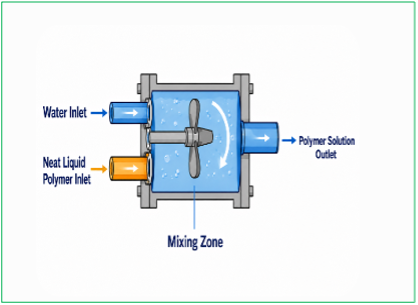
For example , there was a case of the commissioning of the clarifer in which polymer was dosed into the clarifer. Liquid polymer was used & the neat liquid polymer needs to be blended with water to create a diluted 0.2% solution using the blending device as shown in Figure 1.
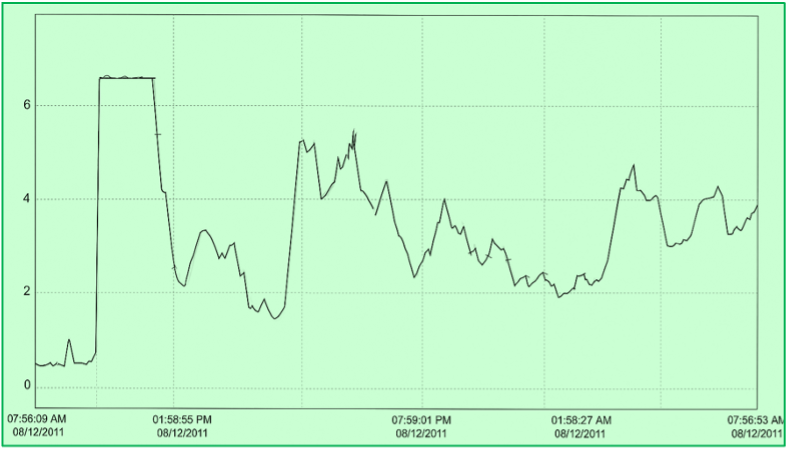
The commisioning engineer was monitoring the turbidity of the settled water on the screen in the control room and adjusting the dosage of the polymer by clickling the mouse on the SCADA to increase or decrease the polymer dosage.
But the results of all this, is a zig zag turbidity curve as shown in Figure 2. If properly controlled, it should be a straight line with only minor variations.
Then what is the problem?
The problem was the feed water was not going into the blending device. As a result, only neat liquid polymer was dosed in. In order for the neat liquid polymer to function, it must be diluted to a 0.1 or 0.2% solution.
Upon checking, it was found the water pipeline supplying water to the polymer blending device was recently modified and upon completion of the job, the contractor did not completely clear the air inside the pipeline. So there was an air lock and water was not able to flow into the blending device.
Hence no AI can detect or predict that there will be an airlock in the pipeline.
An engineer with practical commissioning experience understands the importance of stable hydraulic conditions, gradual pressure ramping, equipment protection logic, temporary operating modes during startup and operator monitoring requirements.
These considerations are often difficult to capture fully in software models alone.
Human Operators Still Matter
Another important factor often overlooked in discussions about AI and automation is the role of plant operators.
No matter how advanced a control system becomes, operators still play a critical role in monitoring abnormal conditions, responding to alarms, performing maintenance, troubleshooting failures & making operational decisions during emergencies.
In many facilities, especially in developing regions, operators may have varying levels of technical experience. Overly complicated control systems can sometimes create confusion rather than improve performance.
Experienced engineers therefore recognise the importance of keeping control philosophies as simple and practical as possible.
A well-designed system should not only function correctly under ideal conditions but should also be understandable and manageable for operators under real-world situations.
This is one reason why practical engineering judgement remains extremely valuable.
Lessons Learned Are Difficult to Replace
One of the most valuable assets experienced engineers possess is lessons learned from previous projects.
These lessons are often developed over many years through site troubleshooting, operational failures, equipment modifications, commissioning difficulties, contractor coordination issues and vendor interface problems.
Examples of practical lessons learned include the need for adequate access for operation and maintenance, avoiding excessive complexity in control logic, providing adequate standby units, not under sizing facilities especially sludge facilities and selection of the right equipment for a particular process.
Many of these lessons are rarely covered in textbooks or software models.
Yet they often determine whether a plant operates smoothly or experiences long-term operational problems.
AI systems may eventually assist engineers in analysing historical data and identifying trends. However, engineering judgement developed through practical experience remains essential in interpreting these findings and making sound decisions.
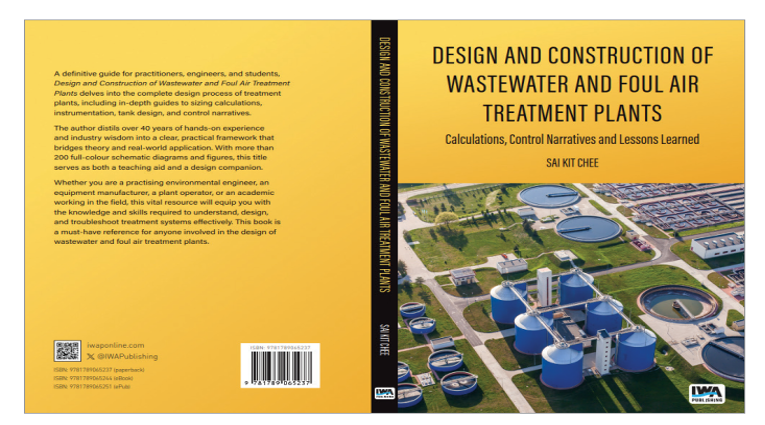
Hence the author has shared his experiences gained from more than 40 years of working in the Asia Pacific region by detailing them under “Lessons Learned” in his recent book on design and construction of wastewater and foul air treatment plants published by the International Water Association (IWA) (Figure 3).
Integrating Technology with Practical Experience
The future of the water industry should not be viewed as a competition between AI and experienced engineers.
Instead, the best results will come from combining advanced technology with practical engineering knowledge.
Digitalisation and AI should be viewed as tools that support engineers rather than replace them.
For example AI can help identify abnormal trends, digital twins can assist with process optimisation, predictive analytics can improve maintenance planning and smart instrumentation can enhance monitoring.
However, experienced engineers are still required to validate assumptions, interpret complex operating conditions, understand site-specific limitations, make practical operational decisions, coordinate multidisciplinary systems and anticipate real-world implementation challenges.
Ultimately, successful projects depend not only on technology but also on engineering judgement, communication, coordination and practical understanding.
It remains one of the most important foundations for delivering reliable, sustainable and efficient water infrastructure.
Hence the author has shared his knowledge in his recent publication on wastewater and foul air treatment plant design published by the International Water Association (IWA).
Conclusion
Digitalisation and AI are transforming the water industry and will continue to play an increasingly important role in future projects.
However, practical engineering experience remains irreplaceable.
Real-world projects involve dynamic operating conditions, human interaction, multidisciplinary coordination and unforeseen challenges that cannot always be fully captured by software models or AI systems.
The most successful water projects will therefore continue to depend on engineers who combine technical knowledge with practical experience, sound judgement and lessons learned from real operating conditions.
As the industry moves forward, the challenge is not whether AI will replace engineers, but how technology and practical engineering expertise can work together to deliver safer, more reliable and more sustainable water infrastructure for the future.

About the Author
Sai Kit Chee is a retired Chartered Chemical Engineer with 43 years of experience across the Asia-Pacific region. He has worked for contractors (Hyflux, Smitech, EcoWater, Chemitreat) to government (Singapore’s Public Utilities Board) to consultants (CH2M, Camp Dresser & Mckee, Worley Parson, Aurecon & AECOM). He is now a freelance water, wastewater and air pollution consultant. He can be contacted at envrtpl@gmail.com.